 |
 |
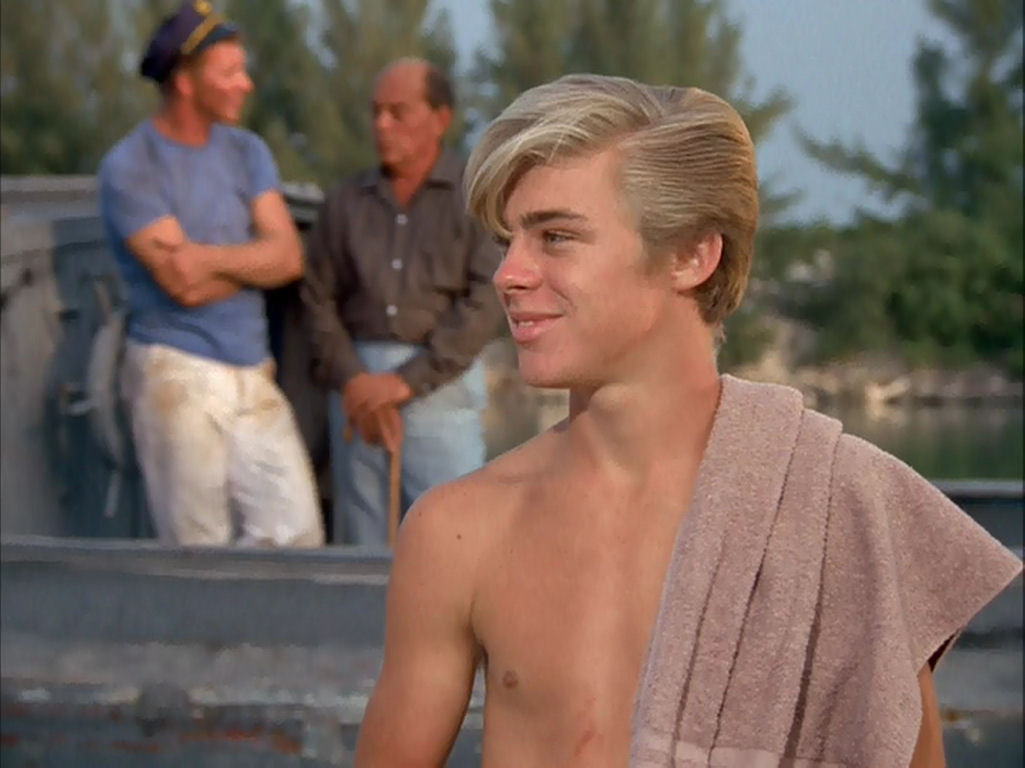 |
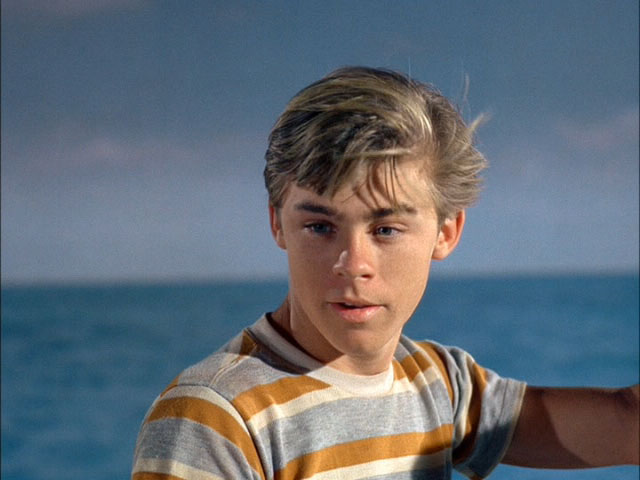
| Luke Halpin in Flipper | ||
[from Wikipedia, classic-tv.com, imdb.com]
Flipper, from Ivan Tors Films in association with Metro-Goldwyn-Mayer Television, is an American television program first broadcast on NBC from September 18, 1964 until April 15, 1967. Flipper, a Bottlenose Dolphin, is the companion animal of Porter Ricks, Chief Warden at fictional Coral Key Park and Marine Preserve in southern Florida, and his two young sons Sandy and Bud.
First Telecast: Sept 19, 1964
Last Telecast: Apr 15, 1967
Original Network: NBC
Number of Seasons: 3
Number of Episodes: 88
Flipper was filmed in Miami at Greenwich Studios, (as Ivan Tors Studios). The show was produced in cooperation with Miami Seaquarium, an aquarium located on Key Biscayne in Biscayne Bay, Miami, Florida. The Miami Seaquarium features a Flipper Dolphin Show which is held in the same lagoon that the feature films and the TV series were filmed. The original house (refurbished) is still there.
In the conclusion of a two-part episode, the characters of Sandy and Bud are written out of the show (by that time both boys had essentially grown out of their roles), as it is detailed how each plans to leave Coral Key — Sandy has been accepted to the Coast Guard Academy, and Bud will be attending a private school remedially, out-of-state, as arranged by their Aunt Martha.
At the beginning of the TV series, Sandy is 15 years old, and Bud is 10 years old. (imdb.com)
Origins of Flipper
The show was created by Jack Cowden and Ricou Browning, a man with extensive experience in underwater filming and underwater performance, notably as the monster in The Creature from the Black Lagoon. A considerable amount of juvenile merchandise inspired by the show was produced during the first-run. The show has been dubbed an "aquatic Lassie".
The television show is an adaptation of the 1963 film Flipper starring Chuck Connors and Luke Halpin as Porter and Sandy Ricks, and its 1964 sequel, Flipper's New Adventure, where Brian Kelly took over the role of Porter.
In adapting the films to a television series, the producers made Porter a single parent and gave him a second son named Bud, played by Tommy Norden. The producers departed yet again from the films in endowing Flipper with an unnatural degree of intelligence and an extraordinary understanding of human motives, behavior, and vocabulary.
Flipper merchandise generated for the juvenile market during the show's first run is now scarce and collectible. Flipper vintage collectibles include: lunch boxes, song books, comic books, coloring books, a Whitman novel, Big Little Books, souvenir spoons, Whitman frame tray puzzles, a board game, Viewmaster reels, and a battery-operated "spouting dolphin" water toy.
Flipper was nominated for two TV Land awards: in 2004 for the TV Land Favorite Fauna Award and, in 2003, for the TV Land Favorite Pet-Human Relationship Award. Flipper appeared twice on TV Guide covers.
The dolphins that played Flipper
The role of Flipper was played at first by a female dolphin named Suzy, though primarily by another female, Kathy, and occasionally by other females named Patty, Scotty and Squirt.
Female dolphins were chosen because they are less aggressive than males and their skins (unlike the skins of male dolphins) are usually free from scars and other disfigurations acquired in altercations with other dolphins.
The five dolphins performed all of Flipper's thespian chores except the famous tail walk, a trick they were unable to master completely.
A male dolphin named Clown was brought in for scenes involving the tail walk.
The famous "voice" of Flipper was actually the doctored song of a kookaburra (Australian bird).
Luke Halpin in Flipper
Luke Halpin was the only actor who starred in both feature films as well as all three seasons of the TV series. (Brian Kelley appeared in the second feature, while Tommy Norden appeared only in the TV series.) Between the 1963 Flipper feature and the three-year TV series (1964-1967), Luke spent the bulk of his teen acting career starring as Sandy Ricks. It became his best known role.
According to a letter by Luke published in 16 Magazine, Flipper was filmed during the summers. Luke Halpin was 17 years old in Season 1, although there appears to be footage that was made earlier when he was 16. He was 18 in Season 2 and 19 in Season 3. Luke turned 20 in April 1967, when the series broadcasted its final episode.
As an experienced swimmer and skin diver, Luke Halpin used his love of water sports to lend credibility to the action-adventure role of Sandy Ricks. Luke performed many of his own stunts. In Ep 31, Flipper and the Mermaid, he did an entire underwater rescue scene wearing only his shorts: no air tanks, fins, or face mask. In Ep 44, Shark Hunt, Luke did his own shark catching, a dangerous job that even the film crew were reluctant to handle.
With natural acting talent and exceptional good looks, Luke Halpin became one of the 1960s' most popular teen stars. Frequently dressed down to only his signature cutoffs, Luke's lean, bare-chested body became a highly anticipated sight on Saturday evenings. Luke was not at all shy, and appeared shirtless in his publicity photos almost as often as he did on television. With his highly toned muscles and near perfect complexion, Luke's young physique won praise and admiration among fans all over the world.
Luke appeared in every episode except three, all in Season 2: Ep 42 (Flipper and the Horse Thieves) and Ep 55/56 (Flipper Joins the Navy, Parts 1 and 2).
Luke Halpin did military service in the National Guard during the series' run, which explains his shorter haircut in several episodes of Season 3.
Flipper Theme Song
The show's theme song was credited to Henry Vars with lyrics by William "By" Dunham. In France the melody was known as "La Romance de Paris" ("The Love Song of Paris").
The words to the Flipper theme song:
They call him Flipper, Flipper, faster than lightning,
No-one you see, is smarter than he,
And we know Flipper lives in a world full of wonder,
Lying there under, under the sea!
Everyone loves the king of the sea,
Ever so kind and gentle is he,
Tricks he will do when children appear,
And how they laugh when he's near!
They call him Flipper, Flipper, faster than lightning,
No-one you see, is smarter than he,
And we know Flipper lives in a world full of wonder,
Lying there under, under the sea!
The first five episodes of the second season feature a completely different recording of the theme, sung by Frankie Randall, with different lyrics:
We call him Flipper, Flipper, you'll see him smilin'
Right from the start, he'll play it smart.
Beware of Flipper, Flipper, he's such a lover,
You will discover when he steals your heart!
When you're feelin' sad, when you're feelin' blue,
He'll make you glad, yes, that's what he'll do,
And what he can do you'll never believe,
For he's got tricks up his sleeve!
Beware of Flipper, Flipper, he's such a lover,
You will discover when he steals your heart!
The background music of the long underwater sequences was inspired by Maurice Ravel's Daphnis and Chloe.